“I’m sick of my videos online only being seen by a few people.”
“The audience we’re reaching isn’t even the right audience.”
If you’ve heard (or said) either of these things, you’re not alone.
Very few organizations are truly reaching their audiences, and most are frustrated. Many are close to throwing in the towel on this whole “video content” thing altogether. The truth is (and deep down, I think we all know this): people don’t care about your story unless you tell it in a way that is important to THEM.
Look, I know this firsthand. Last year, I experimented with putting video versions of this newsletter on YouTube. Just me, talking. No real optimization. And let’s just say…they didn’t exactly light the internet on fire.
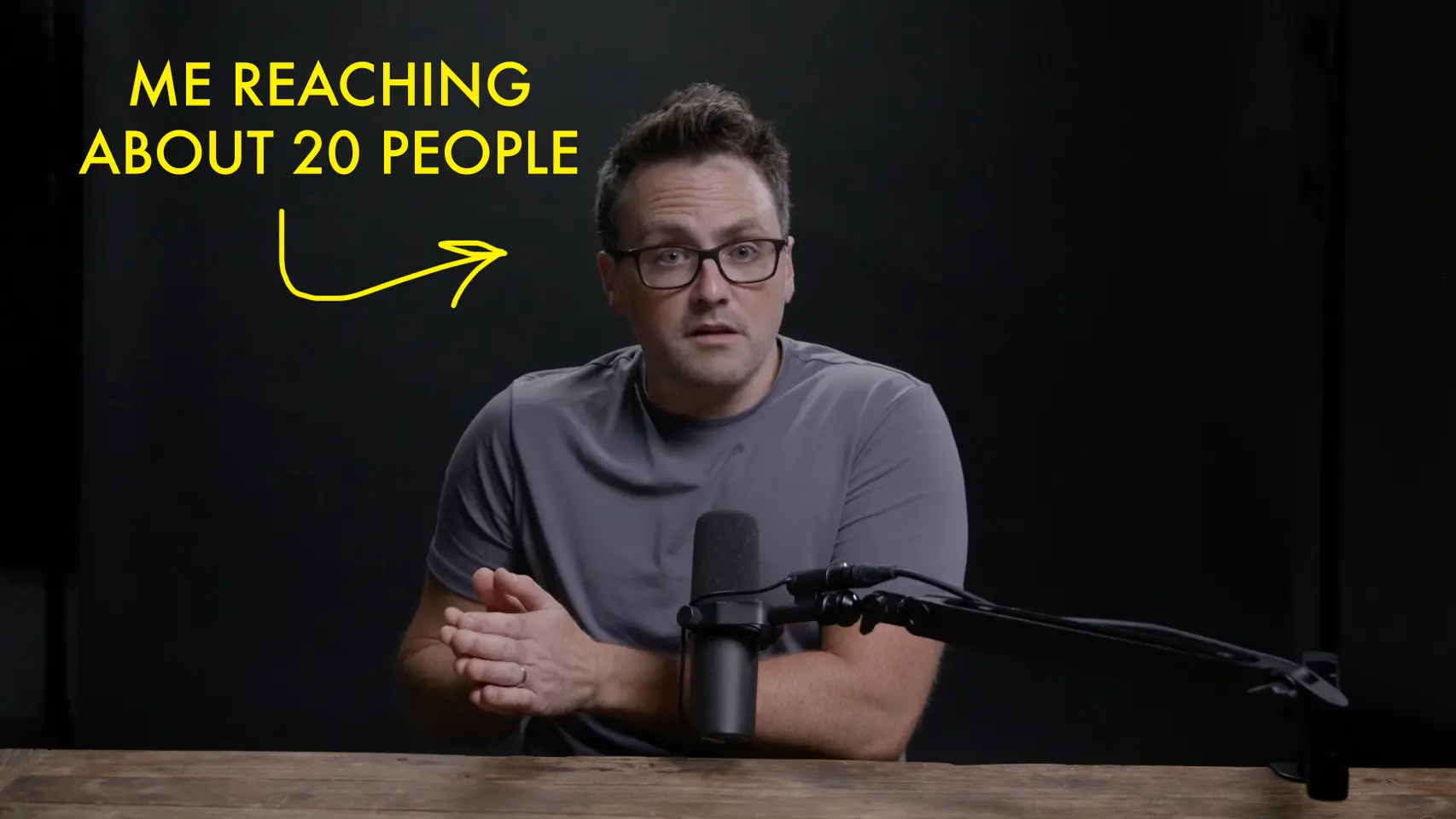
The videos barely cracked 40 or 50 views. And I’m not confused about why. I wasn’t designing for retention, discovery, or scale. And…by most metrics, it looked like a failure.
But something interesting happened anyway.
Even with small view counts, some of the right people were watching. They reached out. They booked calls. They started conversations. Those few imperfect videos contributed to closing roughly $150,000 in projects.
Now, that’s not enough to keep the lights on at Distant Moon for even a month, but it’s more than enough to prove something I’ve believed for a long time: reach is not the same thing as impact.
And I don’t think most meaningful results come from scale. Rather, they come from deep connection with the audience about something they care about.
Do I wish those videos had reached more people? Of course. That’s why we pressed pause on YouTube last fall and, after strategy, restructuring, and preparations, we will return to YouTube in 2026.
But this isn’t just about Distant Moon or my own experiments.
What those YouTube tests confirmed is something we’ve been quietly refining for years with partners like Hillsdale College and others: When the strategy is “bless the audience” or “make the audience’s lives better” success follows. That’s been Hillsdale’s strategy for over a decade now with their free online courses. And when we partnered with Hillsdale to reconfigure and produce their cinematic online courses about 8 years ago, I had no idea it would grow to become one of the most fulfilling aspects of my career: nearly a decade of reaching tens of millions of people with the most important ideas in history.
I’m continually blown away by the impact the Hillsdale courses and documentaries have had on people’s lives (from prison inmates turning their lives around, to veterans processing PTSD through encounters with truth, beauty, and goodness). And I’m equally moved by the ripple effect: how brands, faith movements, and nonprofits have reshaped the way they tell stories because they’ve seen what’s possible in online courses and documentary production, all because Hillsdale has focused on serving their audience with truth, beauty, and goodness.
Which inevitably leads to the question I received at event I attended last week: “How did you guys build Distant Moon to be able to produce work like Hillsdale’s courses and documentaries?”
And after pondering the question, here are the top four things that come to mind:
1. Start Small.
Don’t start with the million-dollar production. With Hillsdale we started with one small project. It wasn’t glamorous. But over 8 years of close collaboration we’ve been able to scale to dream-level projects together. Start with strategy. Testing. Low lifts. Build from there. I think about the verse all the time: “Be faithful in the little things, and much will be added.”
2. Your Audience Is the Hero.
You are not the hero. Your brand is not the hero. Your audience is the hero. They are looking for a guide who understands their problems and can help them address the most pressing concerns in their lives (Read Building a StoryBrand by Donald Miller for a deep dive on this idea).
3. Marketing As We Know It Is Dying. Focus on Entertaining and Enlightening.
Here’s my 2026 thesis (ok, I also was saying this in 2025) – Traditional advertising will shrink to a bare minimum and become almost entirely AI-driven. People will hate it. They’ll live for the moment they can hit “skip.” Smart brands will reallocate their budgets to storytelling that enlightens and inspires. And audiences will flock to those brands.
That’s why Red Bull is thriving. That’s why Chick-fil-A has gone so far as to launch its own streaming platform. That’s why Under Armour is shifting away from a heavy dependence on traditional ad campaigns, toward in-house, narrative storytelling (In fact UnderArmour basically gives their whole thesis here).
The smartest nonprofits and brands aren’t investing big in commercials. They’re investing in education and entertainment. They’re investing in the sort of content that tangibly improves their audience’s lives.
4. Know What You’re Aiming At.
People without a plan perish. Brands even more so.
This is the primary reason most startups (including nonprofits) fail. They don’t know why they’re doing what they’re doing, or where they’re going.
At Distant Moon, our aim is to build the most impactful film studio of the 21st century. Our mission is to foster human flourishing around the globe by helping audiences wrestle with life’s deepest questions, understand the world around them, and come into contact with the Creator who made that world. That’s because we firmly believe that Audiences around the globe need uplifting and enlightening entertainment and education.
So here’s my encouragement to you: Don’t add more noise to an already deafening world. Serve your audience with your content the same way you serve them with your product or service or mission.
Every organization will do this eventually, or they’ll go out of business. Most will do it in the next five years. You could do it this year and define your industry.
That’s what we’re focusing on at Distant Moon in 2026. That’s what our forward-looking partners are doing. And I hope it’s what you and your organization will do too.
Happy 2026. Here’s to human flourishing!
-Ian
P.S. – I’m hosting a special invitation-only session at NRB next month called “The Future of Film.” If you’re going to be there (or in Nashville area) on February 20th. I’d love to see you there! Structurally based on the idea of a mastermind session, we’re showcasing work from some of the nation’s leading nonprofits and discussing the state of the industry and where we’re headed.
Join leaders and thinkers from Global Outreach International, Prison Fellowship, Mission Aviation Fellowship, Ligonier Ministries, Charity Water, and more. And hear incredible insights from marketing strategist Allen Thornburgh, veteran producer Bobby Downes, and myself. It will be a really beneficial time for all involved.
Sign up at https://distantmoon.com/futureoffilm/