
If you’ve known me long, you know that I’m a HUGE goal-setter. One of the conversations I often find myself in at the beginning of each year is with people who ask “But what do you do when you don’t accomplish all the goals you set each year?” And admittedly, I usually don’t accomplish most of my goals each year (like over 50%). But, for me, goals don’t act like taskmasters beating me over the head. They act as friends reminding me what I’m working toward and for. If I can revisit those goals each week, each month, I have a better chance of landing where I want to land over the coming decades.
Among the over 30+ goals I set for 2026, two stand out that I want to share with you today. The first was to have a film open in theaters before the end of the calendar year. And the second was for that film to succeed at the box office.
Now, for the first time, I can say we’re one step closer to both (at least the first one). And completion of the second is up to you.
On May 31, the documentary I’ve spent the last year and a half making will be released in theaters nationwide.
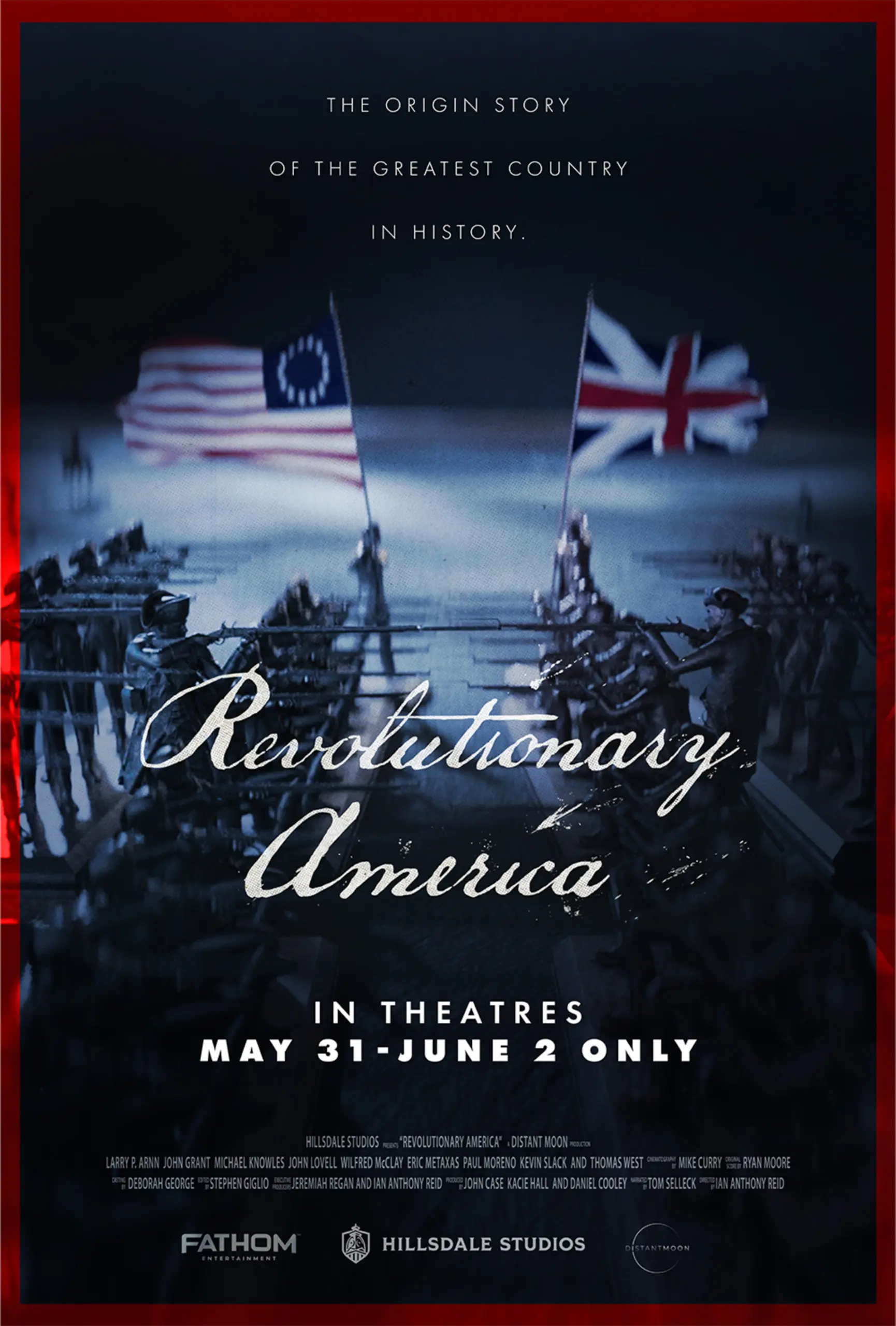
Revolutionary America tells the story of the founding conflict of our country – the men and women who risked everything to establish a nation unlike any the world had seen. We made it in honor of the 250th anniversary coming up in July and I really hope you’ll join me to see it in theaters on May 31!
But more than telling you about the film, I wanted to give you a peek into making a feature-length theatrical documentary.
The film really began to take shape in January of 2025. We were filming in Michigan (one of several locations we would shoot over the course of the year). What made that moment distinct was that we were actually producing two projects at once: this film, Revolutionary America, and its prequel series, Colonial America, which explores the settlers who first came to this continent and why they risked everything to enter an unknown world.
From the beginning, one question drove the entire process: what kind of people would put everything – their lives, their fortunes, their sacred honor – on the line against the most powerful nation in the world? On paper, it was suicide. So why would they do it?
Directing this film has been about chasing that question. And that’s not just an abstract philosophical question. To me, it was a very human one. Imagining what it would take for me to put my entire life on the line brings this point home to me personally. And so my goal has been to bring the audience close enough to these individuals that their decisions don’t feel distant or inevitable, but personal, costly, and necessary.
But what people often don’t see is how demanding that process really is. A documentary like this begins long before the camera rolls. You’re writing, outlining, and trying to shape a coherent story out of something incredibly dense and complex. Each historian and expert we interviewed spoke with us for anywhere from three to nine hours. And each usually ended their sessions ready for a nap (or a stiff drink). It was exhausting. By the end, we had around forty hours of interviews alone.
But the harder work comes after that.
Taking all of that material and distilling it into a clear, compelling, ninety-minute narrative is its own challenge. A documentary especially is made in the edit. It involves months of shaping structure, refining the story, and cutting anything that doesn’t earn its place. Even after the edit is locked, there’s still a long road: color, sound design, theatrical mixing, visual effects, motion graphics. Every layer matters if you want the audience to feel fully immersed.
One of my personal goals for this film was that it put audiences into the history in a way that they’ve never experienced before; and I think there are some uses of both old and new technologies to help us achieve that goal that will pleasantly surprise audiences. To create something immersive like that, even a “simple” documentary requires a long, collaborative effort across dozens of people. This film was made over two years and a budget 1/30th of last year’s Ken Burns documentary series about the American Revolution. Different approaches, different forms. But it gives you a sense of the scale.
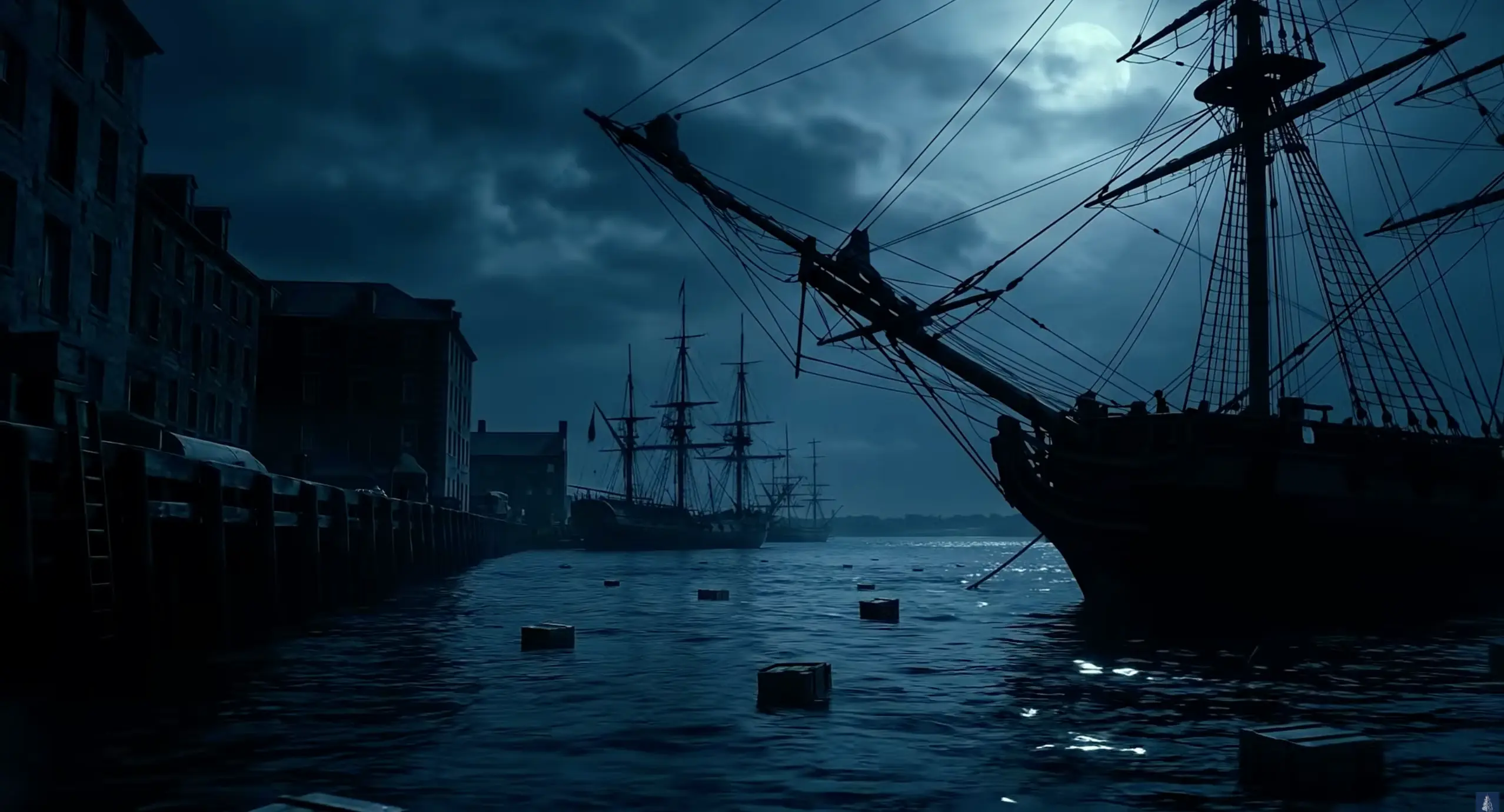
I think the reason we were able to pull off a project of this scale at the budget and timeline we did was twofold: 1. the Distant Moon leadership has built an incredible internal team that punches way above its budget class and 2. Hillsdale: Hillsdale team of researchers and historians brought an immense knowledge of the subject to bear. I was talking with my friend Jeremiah Regan (Executive Producer of the film) and he made the remark that for filmmakers like Burns, perhaps as much as half of the time it took to produce their series was spent learning the material to the level that they could piece together the story arc. Our partners and many of our teammembers have spent the last decade studying, learning and understanding the history before ever working on the project. Having partners who can speak to the history with confidence and mastery was vital to the timeline of this project.
With that in mind, I’ve been incredibly grateful for the partners who made this possible: Hillsdale College, Jeremiah Regan, Fathom Entertainment, and the team at Distant Moon. Films like this don’t happen without people who believe deeply in the work and are willing to carry it forward over a long stretch.
We made this film because we believe these questions still matter. Not just what happened, but what it required, and what it might require of us today.
The film will be in theaters for three days only: May 31-June 2. If audiences show up, it extends. If you’re curious about how to help us bring this film to even more audiences, hit me up! I’d love to talk!
And, if you’re curious, you can watch the trailer now!
Here’s to Human Flourishing!
-Ian